
Read Custer County Property Tax Records
Two offices split Custer County property tax records. The Assessor values and classifies property, maintains the maps, and mails assessment notices. The Treasurer bills and collects the tax. So a CTAS value is not a live balance, and a payment receipt never replaces the assessment record behind the bill.
| Field | What It Shows | Where |
|---|---|---|
| Tax year and parcel | Identifies the assessment period and tract | CTAS and Assessor |
| Land and improvements | Separates the value components on the roll | Assessor |
| Class and taxing district | Provides assessment and levy context | CTAS and county offices |
| Exemption or reduction | Explains why taxable treatment may differ | Assessor |
| Bill, installment, and receipt | Shows the collection side for a stated year | Treasurer |
Idaho assessors value property at market value. A bill then applies taxing-district levies and any valid relief. Neither figure equals a sale price, and the Treasurer's balance can move with payments or delinquency action.
Custer County's Tax Calendar
The Custer County Assessor mails assessment notices in the first week of June. The Treasurer follows with tax notices by the fourth Monday of November. Taxes are payable in full by December 20. They can also be paid in halves, due December 20 and June 20.
Those dates answer different questions. A June value notice and a November bill are separate documents. Keep the tax year, notice date, due date, and payment date distinct. A due date may land on a weekend or holiday. Confirm current county instructions rather than assuming a shift.
Note: A CTAS historical-year choice supplies assessment context. It does not prove that a Treasurer installment is paid.
The Custer Online Tax-Bill Gap
Custer County publishes no online tax-bill lookup. The Treasurer's page explains notices, due dates, and payment methods. It offers no searchable bill or receipt database. The reliable route is a narrow counter or phone request, with mail or another remote channel confirmed by the office.
Start with the APN and tax year from CTAS. Ask for the bill, current balance, receipt, payment history, installment status, tax code, delinquency or redemption facts, and any copy or certification. An old notice alone proves nothing. An empty web search proves nothing either.
Request a Custer County Tax Bill
Start with the assessment key. The CTAS parcel search pinpoints the exact APN and selected year. Its visible filters cover owner, parcel, street, city, section, township, range, class, district, subdivision, and sales.
- Search CTAS by street address, owner, or exact parcel number and save the chosen tax year.
- Confirm the parcel, class, district, and value fields displayed on the returned assessment record.
- Give the Treasurer the APN and year, then request the bill, receipt, balance, and installment status.
- Ask the Assessor about the notice, classification, or exemption; ask the Treasurer about billing and payment.
- Assessed value
- The value placed on the assessment roll for the stated year.
- Levy
- The taxing-district rate applied in calculating tax.
- Homeowner exemption
- Relief for a qualifying primary residence and up to one acre.
- Tax lien
- A legal claim tied to unpaid tax, which must be confirmed from current official records.
CTAS Filters for Custer Tax Research
The public CTAS form covers tax years 2000 through 2025. No login or payment is required. That range is portal search coverage, not proof of a complete tax-bill history, so begin with one key at a time.
| Visible field | Use in tax research | Caution |
|---|---|---|
| Tax Year | Choose the assessment period | Not a Treasurer payment year screen |
| Parcel or CAMA account | Target a known record | Do not assume both numbers match |
| Owner or address | Find an unknown parcel | Mailing, situs, and city fields may differ |
| Class or district | Narrow similar returns | Class is not zoning |
| Sale range | Test comparable transfer leads | Returned price label was not confirmed |
Trust the labels CTAS actually returns. Land, improvement, taxable-amount, and transfer figures should come from the record itself, never from guesswork.
Custer County Relief Programs
The Idaho State Tax Commission homeowner resources cover the homeowner exemption, property-tax reduction, deferral, and qualifying veteran relief. The 2026 Property Tax Reduction form asks for county, code area, parcel, ownership, eligibility, and property-use facts. Some fields are protected personal data. Keep those out of any public record summary.
An exemption, reduction, or deferral is not a low market value. Confirm current rules with the Assessor. The county's historic minutes mention a museum exemption and a fire-hardship action. Those are leads, not proof of present status.
Delinquent Custer Property Tax Checks
Custer County posts no online tax-sale roster. A sound check spans several offices. Ask the Treasurer about delinquency, installments, redemption, or tax-deed status. Ask the Recorder for recorded tax instruments. Search unsealed Idaho iCourt matters when litigation may exist.
An unpaid balance is not automatically a recorded lien, foreclosure, or completed tax sale. Record the date and status each custodian supplies. A later payment, redemption, release, or deed can change the answer.
Custer Assessment Class Is Not Zoning
CTAS offers agricultural, commercial, exempt, industrial, mineral, natural resources, possessory interest, residential, state, and vacant choices. Those are assessment filters. They say nothing about land-use rules.
Zoning, subdivision, building, floodplain, and area-of-impact questions belong to Custer County Planning and Zoning or the correct city office. A parcel can carry a postal city name without lying inside that city. Keep class, taxing district, ZIP, and land-use jurisdiction separate.
This matters when comparing Custer County property tax records. Two similar tracts can differ in class or district, while two same-class tracts can face different permit rules. Save each record date.
Compare Custer Values With Care
The Idaho Tax Commission publishes ratio-study methods that weigh assessments against sales across the state. Those numbers answer a statewide question. They cannot stand in for Custer County comparable sales. They also say nothing about a single parcel's size, use, access, condition, improvements, or class. If you plan an appeal, ask the Assessor what evidence is accepted. Ask as well how your property was valued.
CTAS sale filters work best as leads. The price label they return was never confirmed. Before you treat a figure as a sale price, verify the consideration stated in the recorded deed. You can also check other deed records for the parcel.
Contest a Custer County Assessment
Begin with the Assessor's office. Review the June notice carefully. Idaho guidance then directs taxpayers to the county Board of Equalization. That board convenes on the fourth Monday in June. Strong evidence speaks to the parcel itself. It should cover size, use, condition, classification, and comparable local sales rather than broad averages.
Appeals beyond the county go to the State Board of Tax Appeals or district court. The filing window after a county decision is generally 30 days. Check the current notice, filing form, deadline, and delivery method before you submit anything. The Idaho Tax Commission appeal path lays out the sequence from assessor review. It continues through formal appeal.
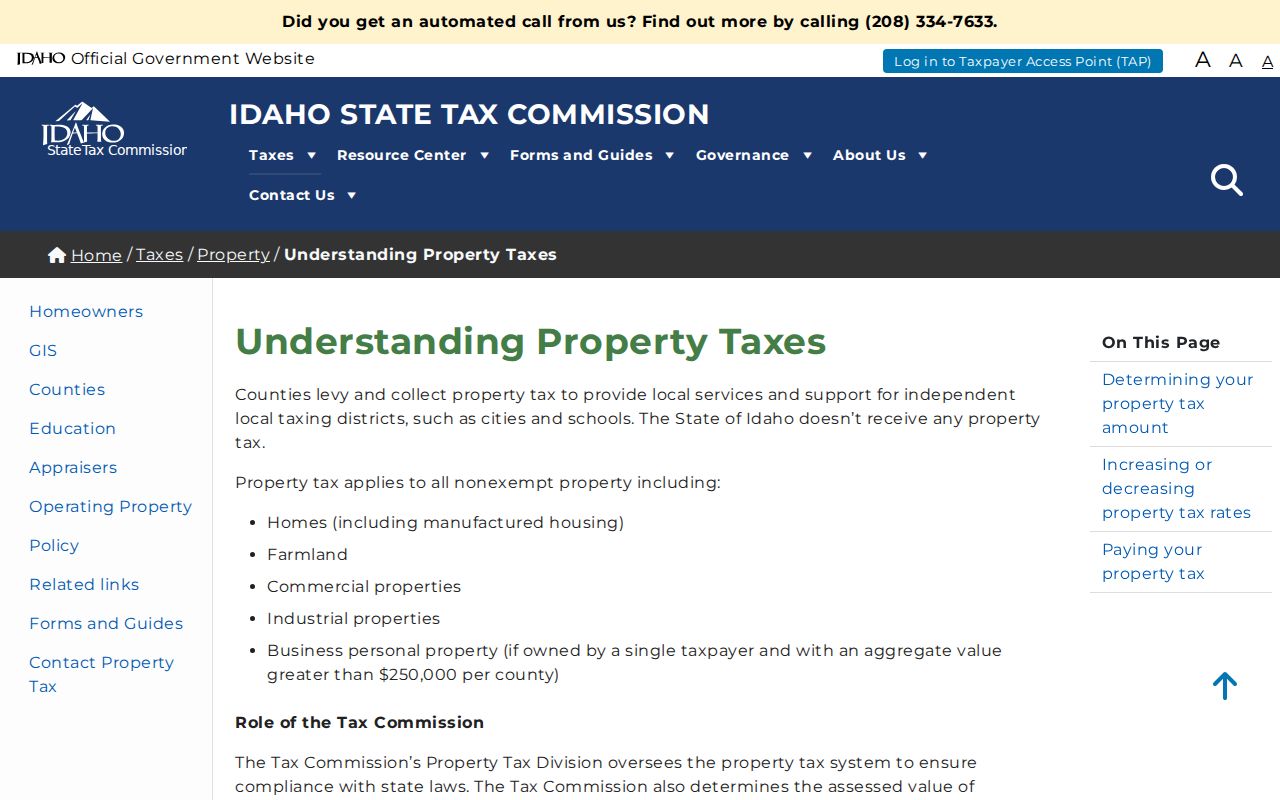
State guidance explains the process. The county notice still controls your parcel facts and filing instructions.
Act on the June notice. Contact the Assessor first, then verify the Board of Equalization deadline and any 30-day appeal period shown in the decision.
Running a parcel-key search? Follow the Custer County property search steps. For value terminology apart from tax-bill mechanics, see Custer County property value.